Конкурс Вишиванки 2026 у «Cafe 67»/Διαγωνισμός Βισιβάνκα 2026 στο «Cafe 67»
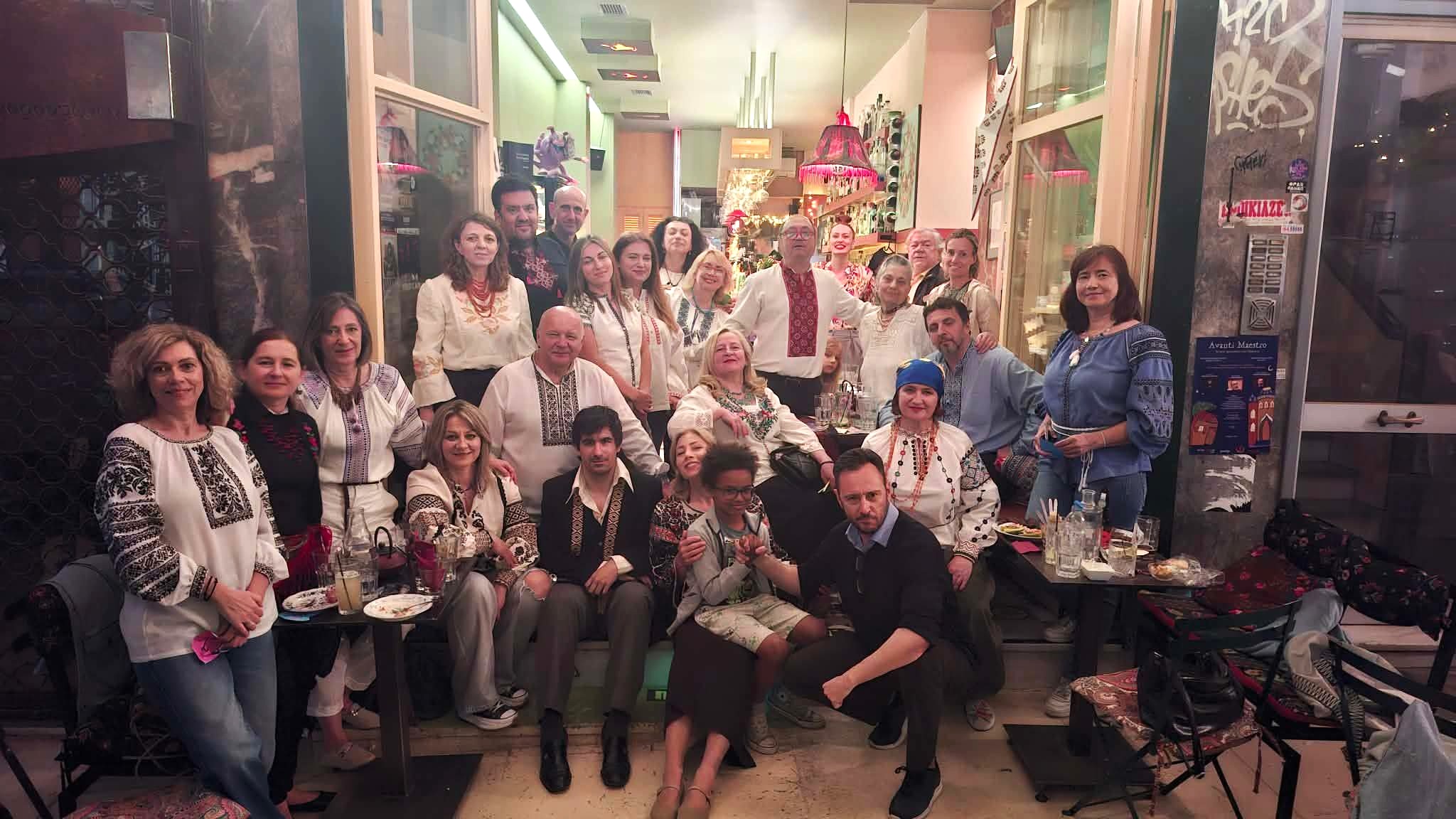 День вишиванки у громаді Греції став мостом між українською традицією, повсякденним стилем і дружньою атмосферою зустрічі в «Cafe 67».
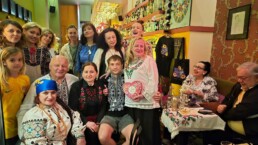
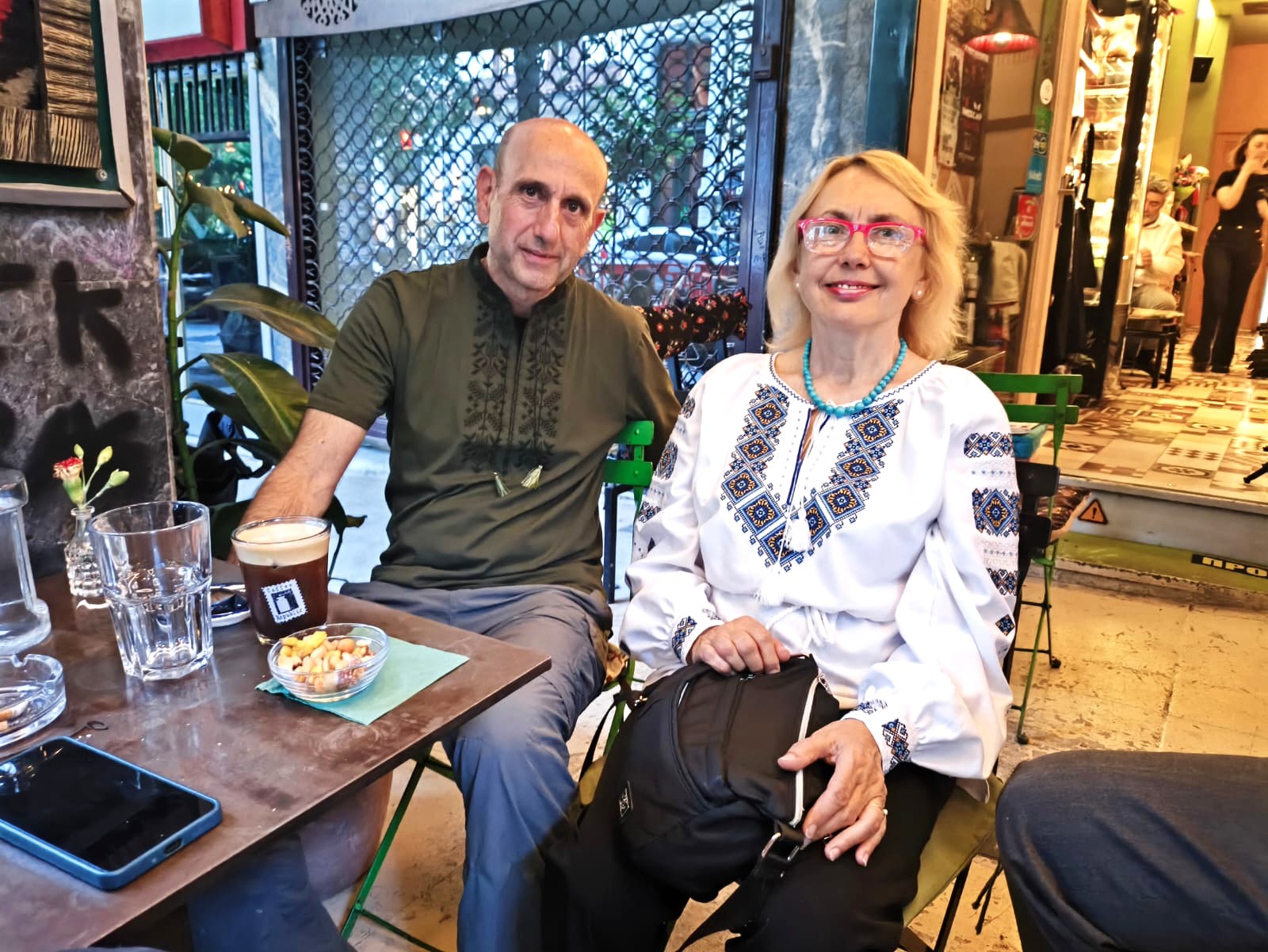
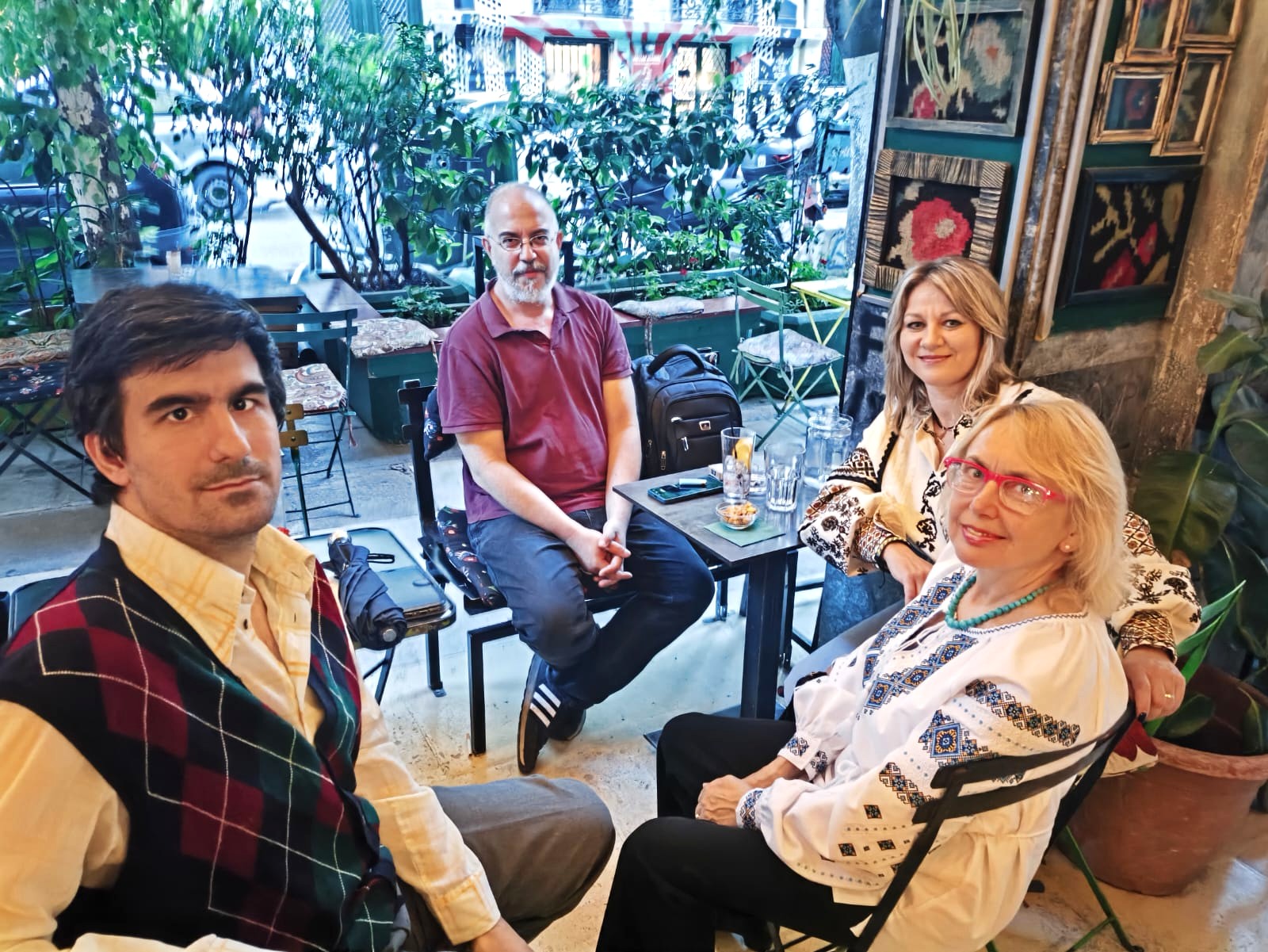
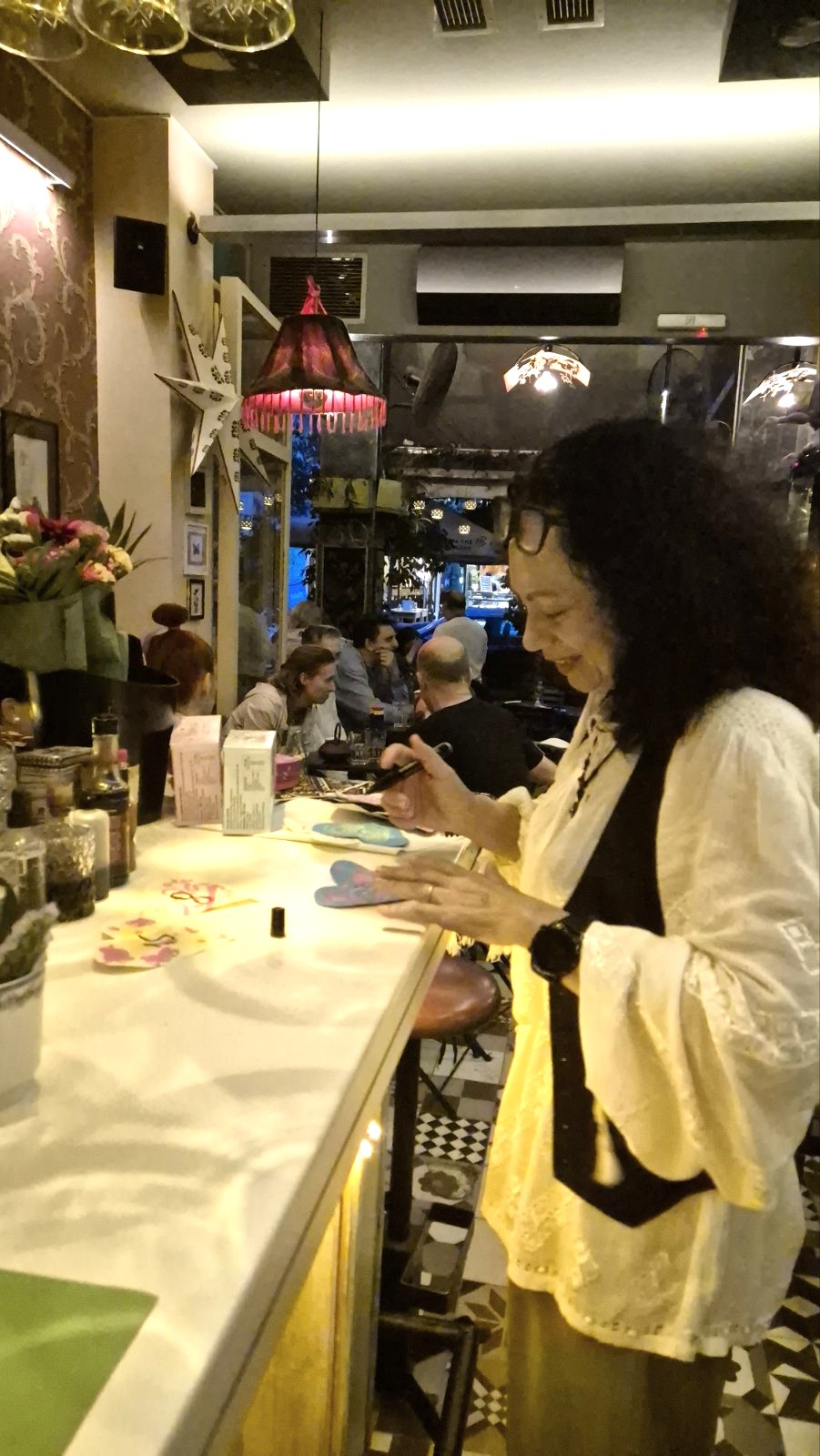
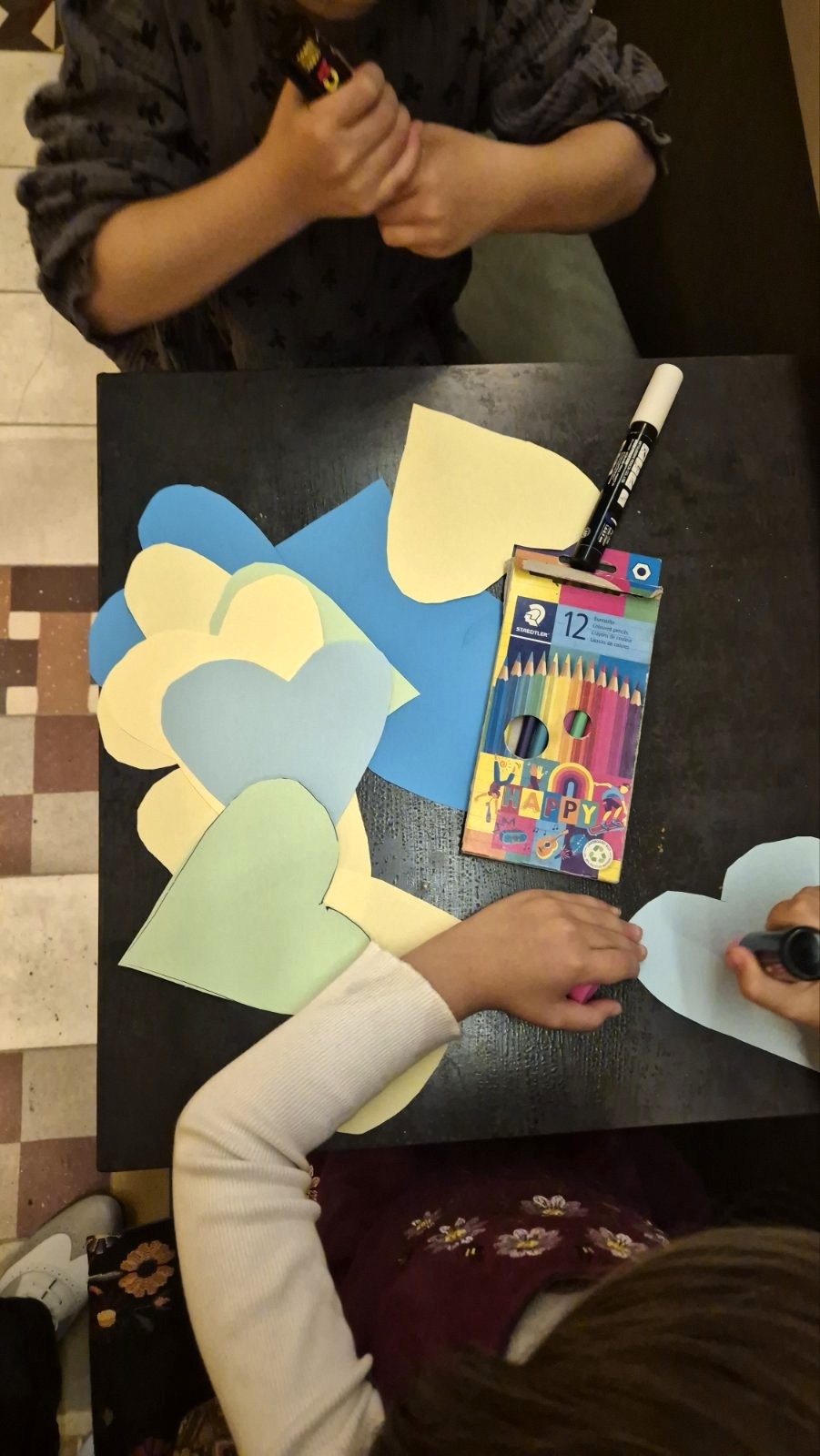
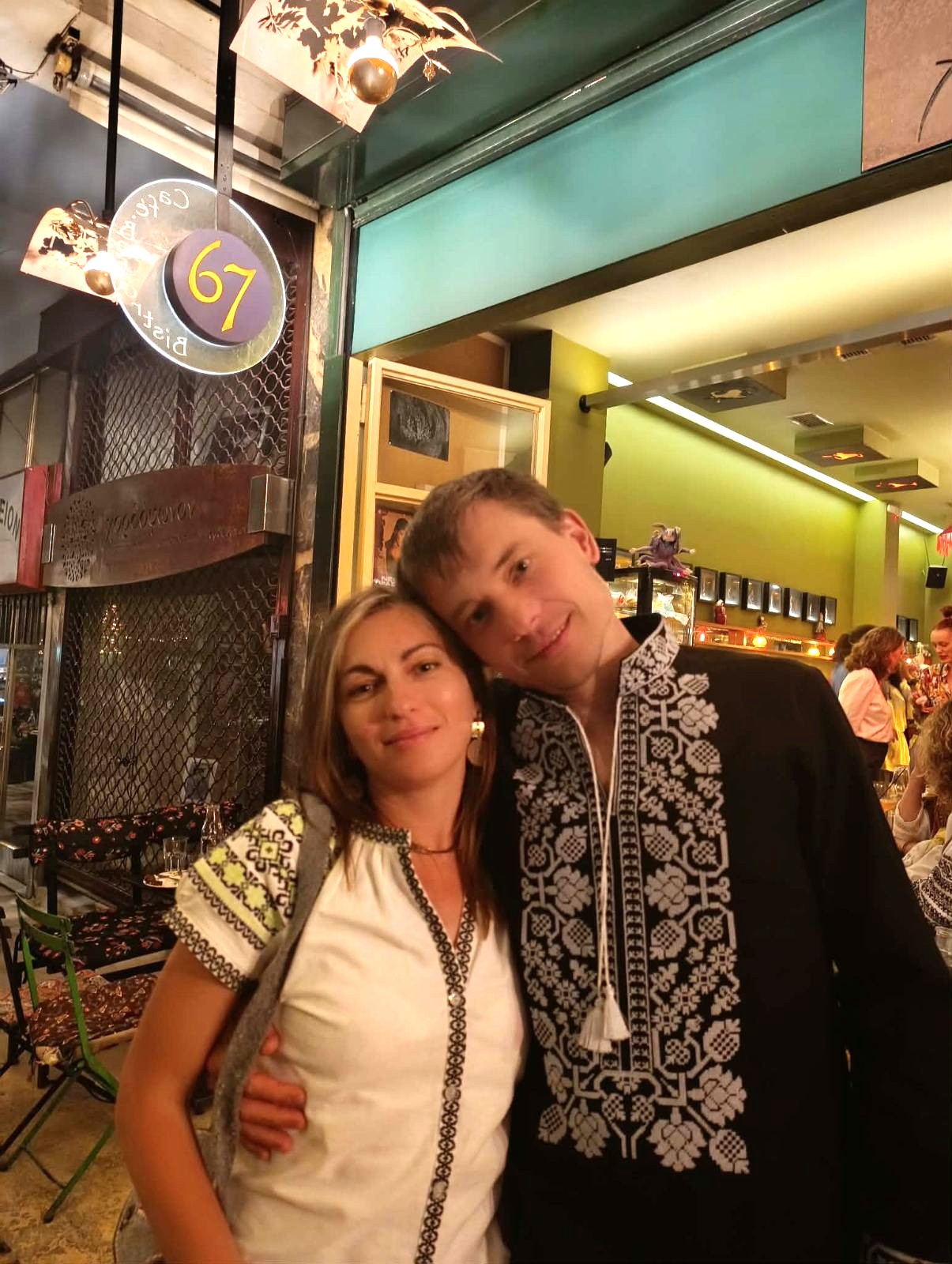
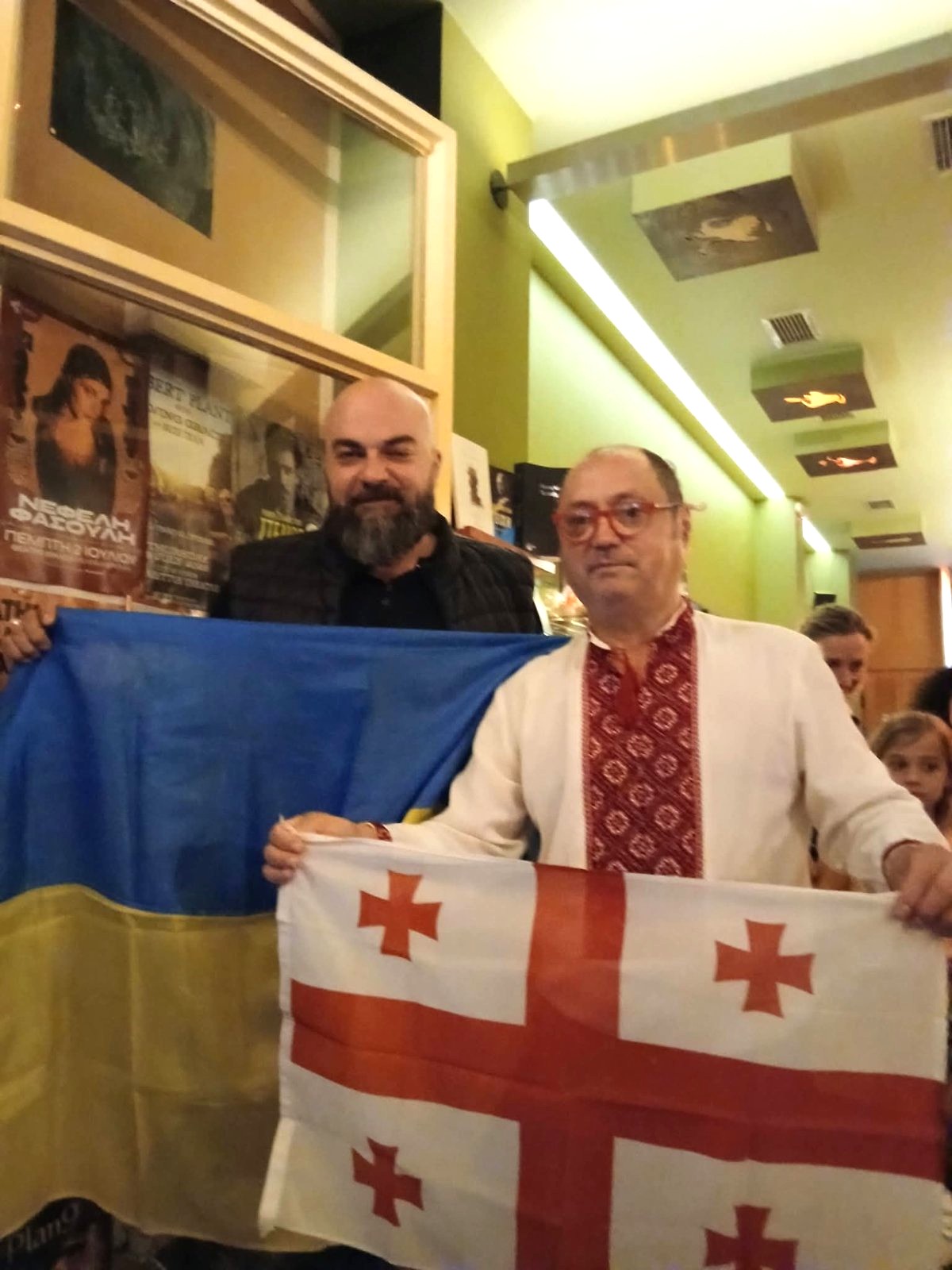
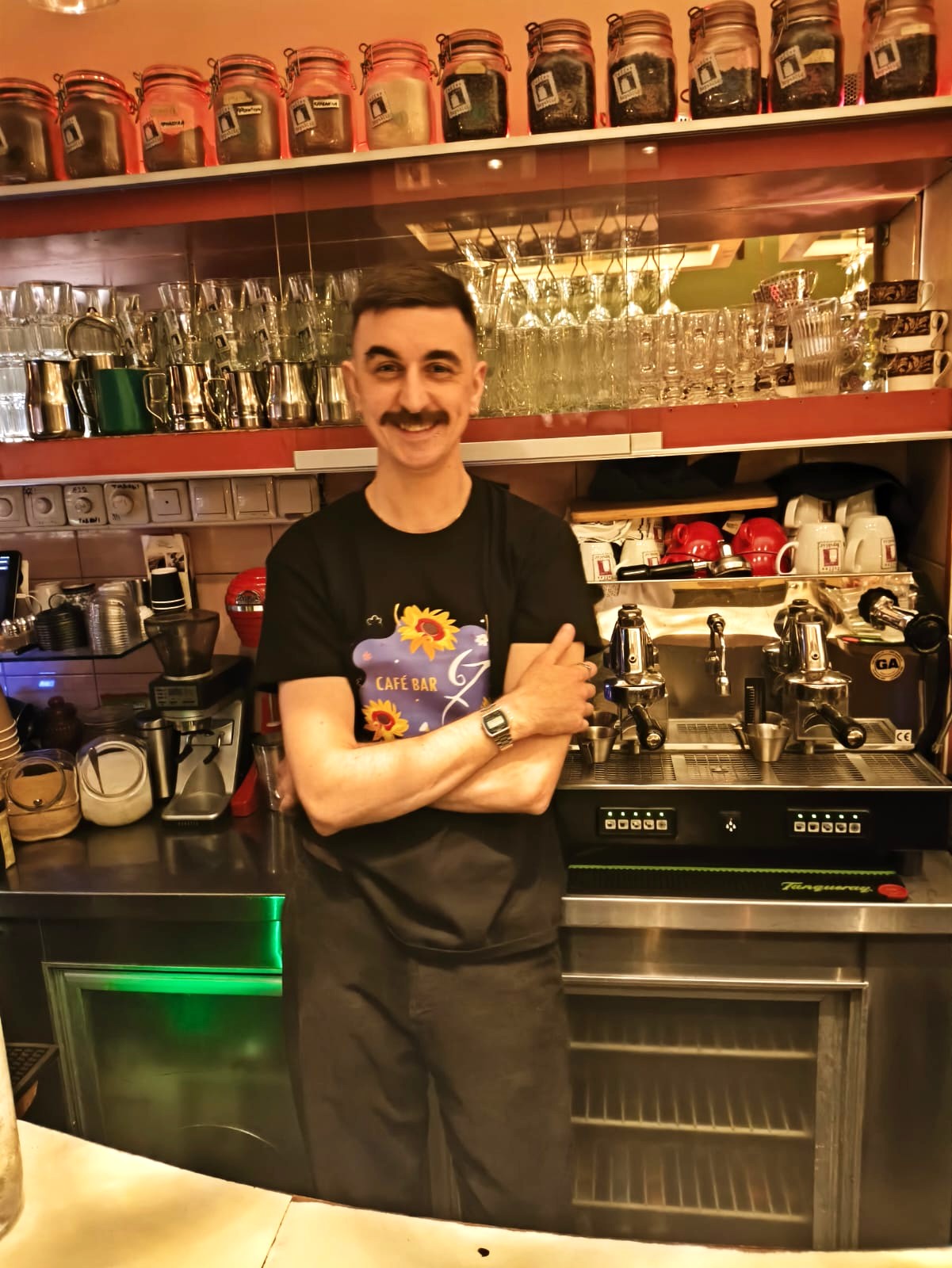
21 травня 2026 року, коли Україна вже двадцять років відзначає День Вишиванки — у третій четвер травня, — у добре знайомому українцям «Cafe 67», що на вулиці Еммануїл Бенакі, 67, в атенському районі Ексархія, відбувся дружній конкурс.
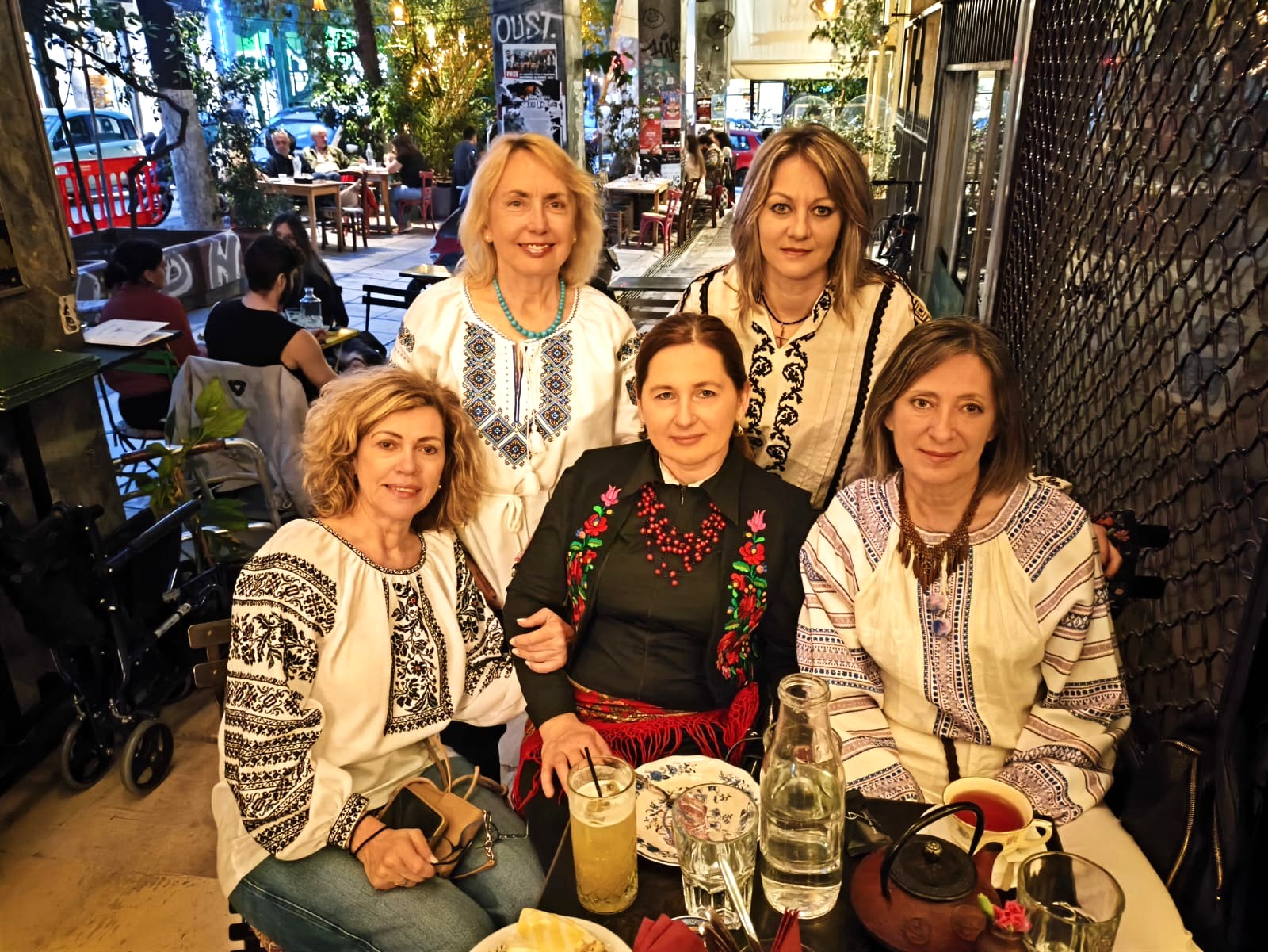
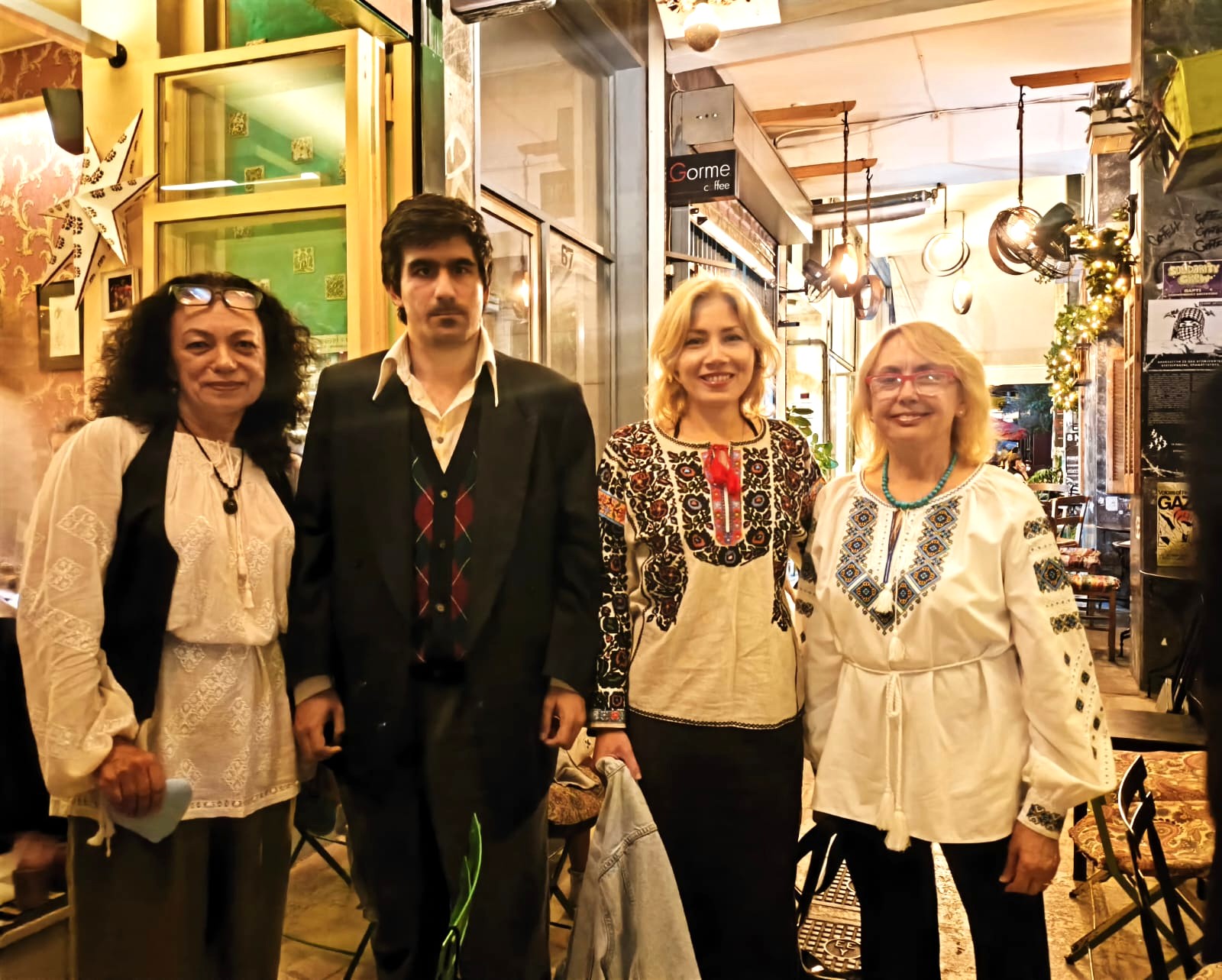
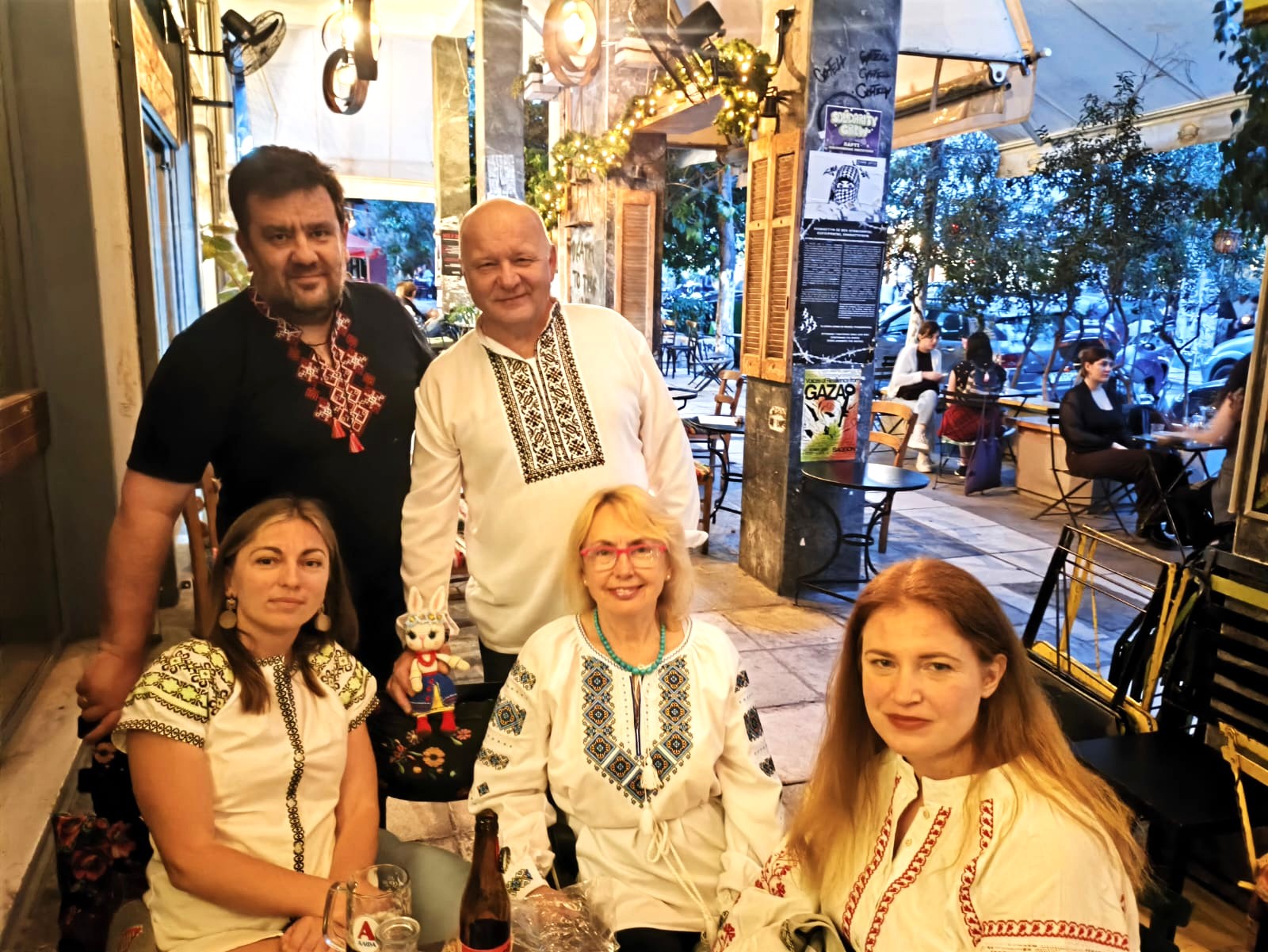
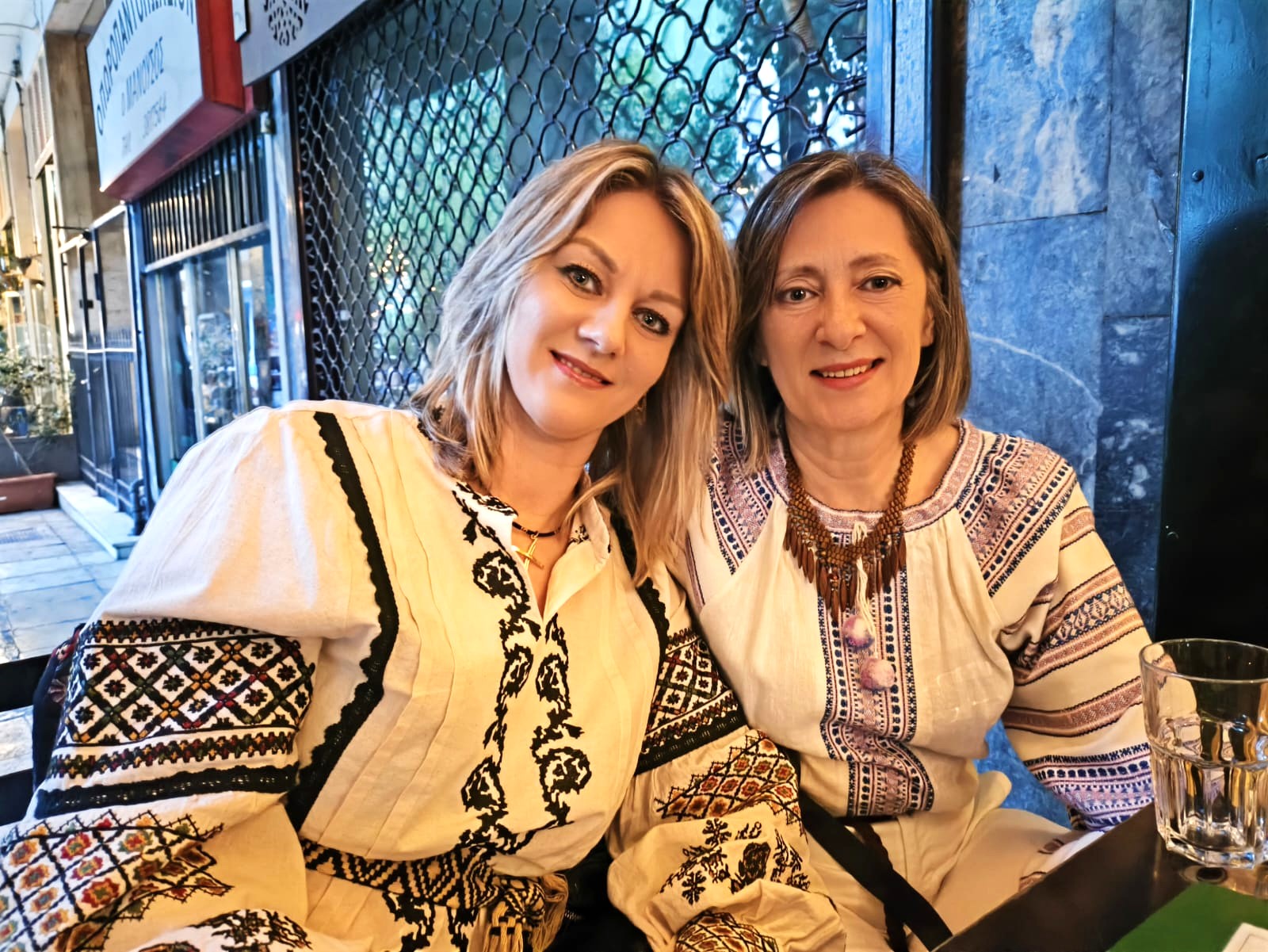
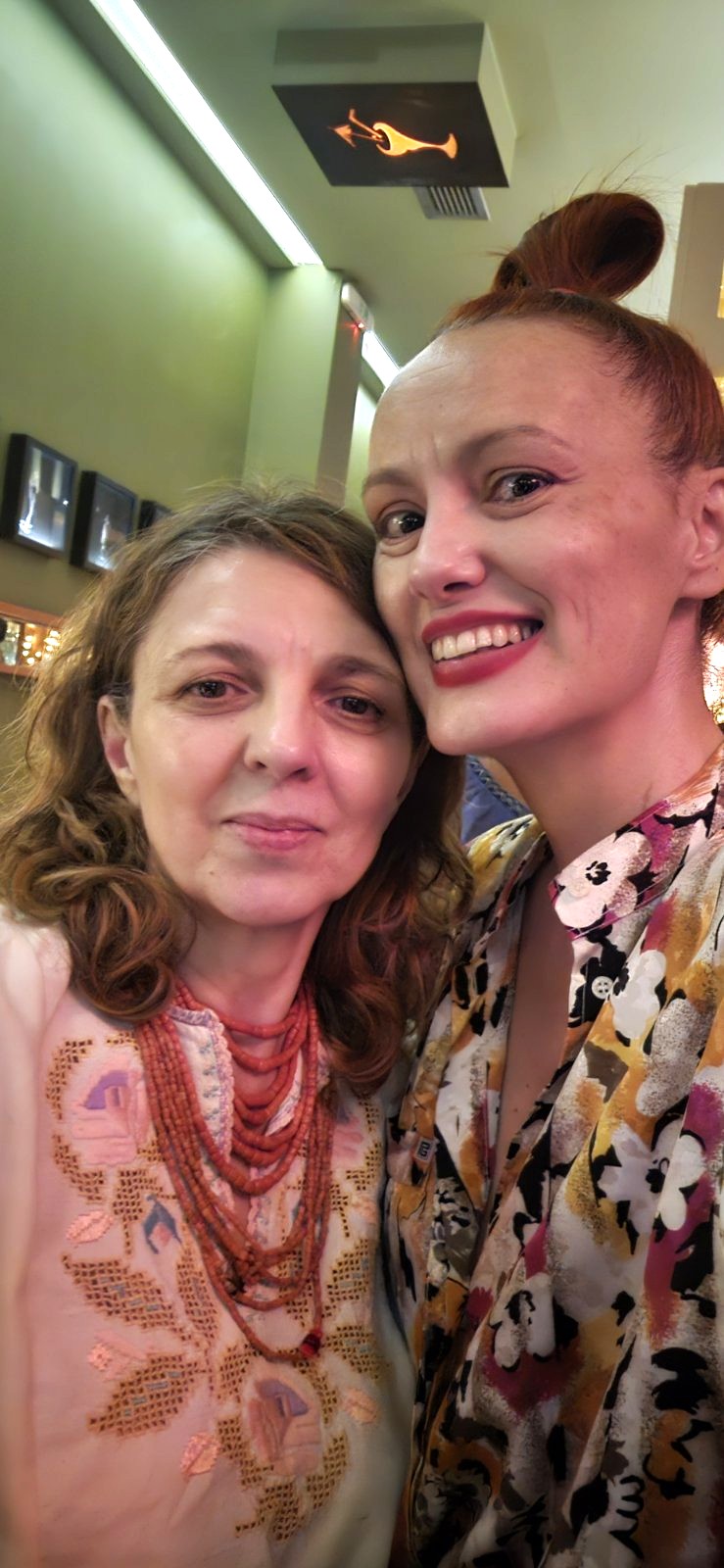
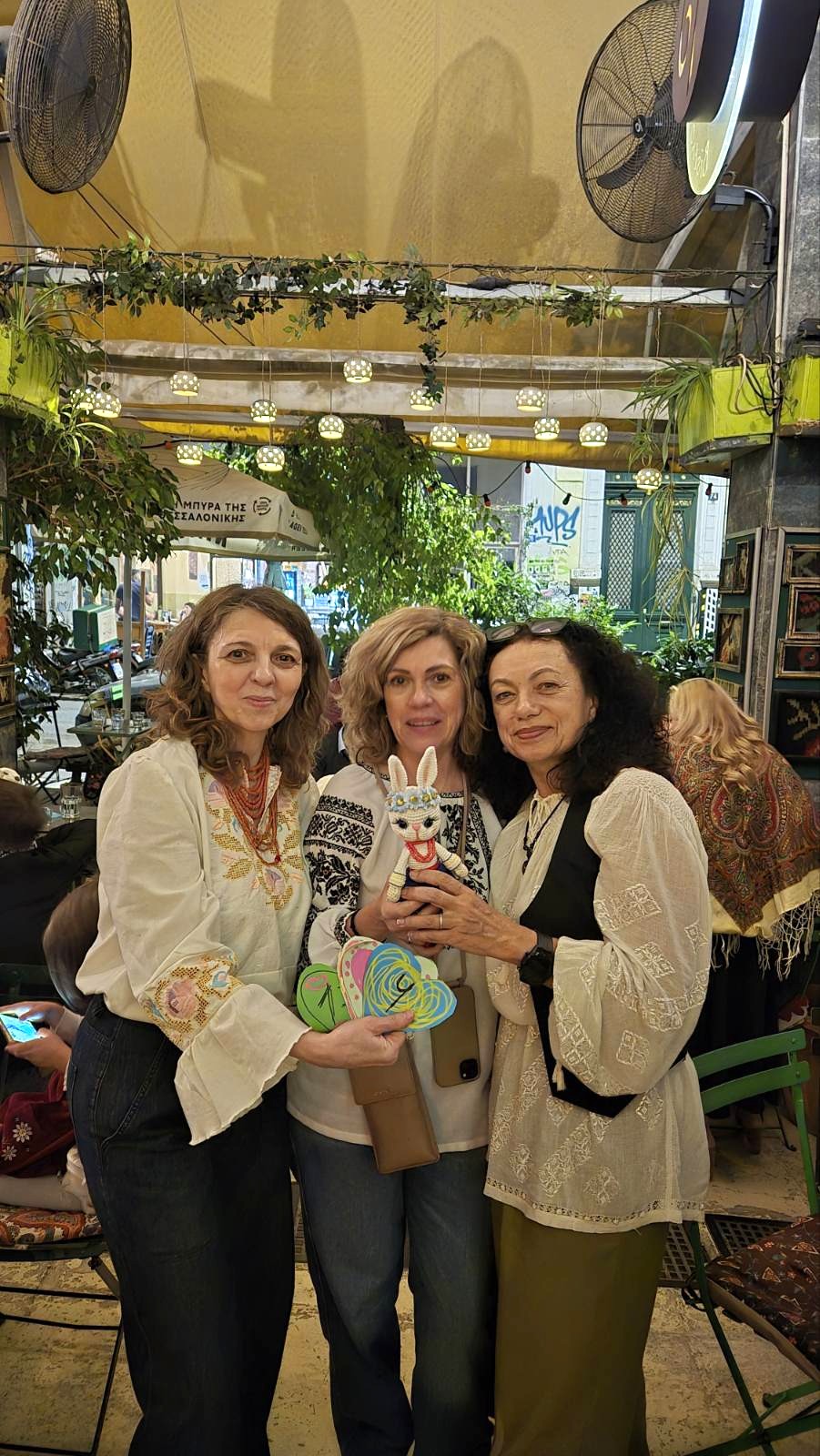
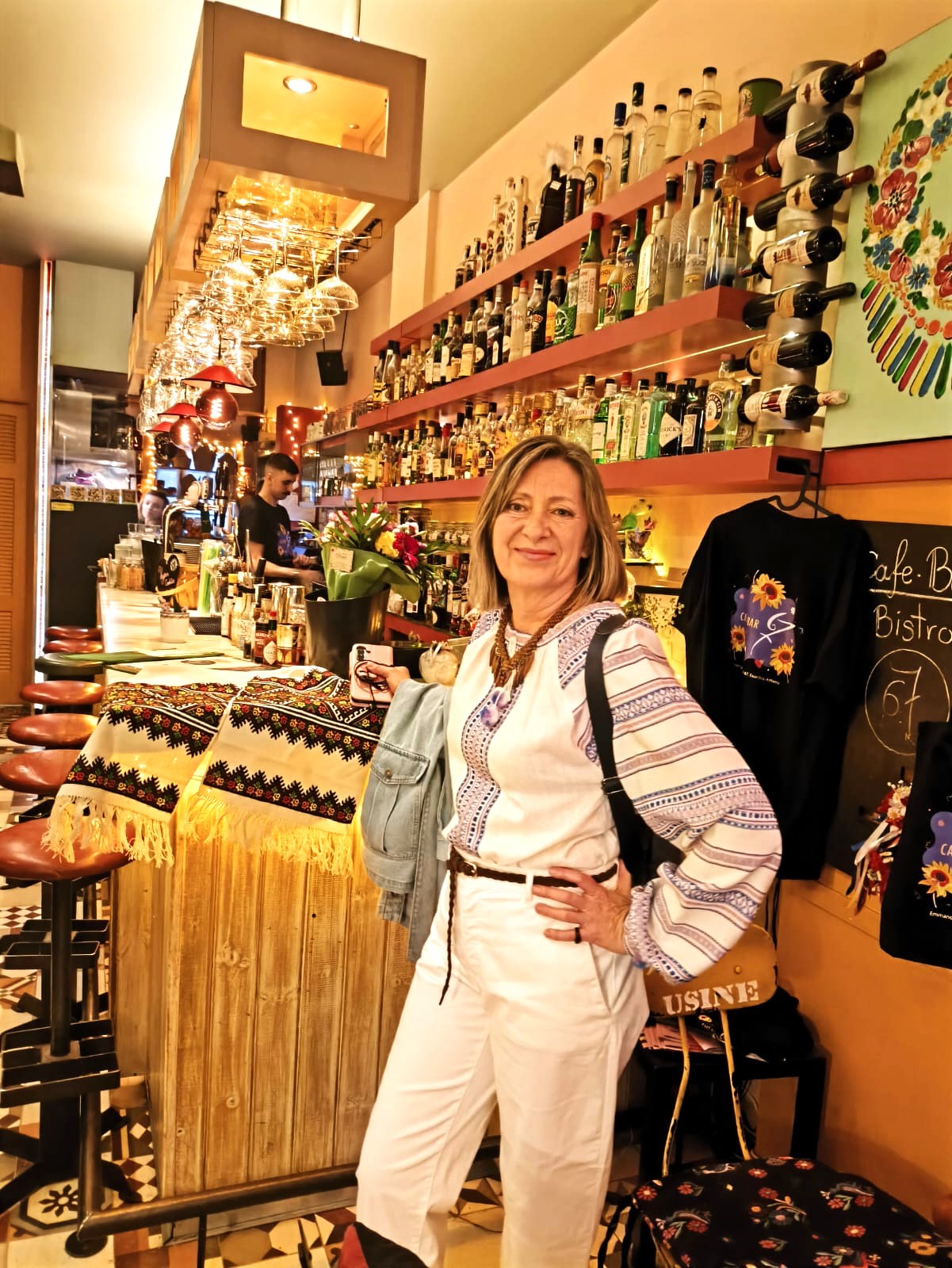
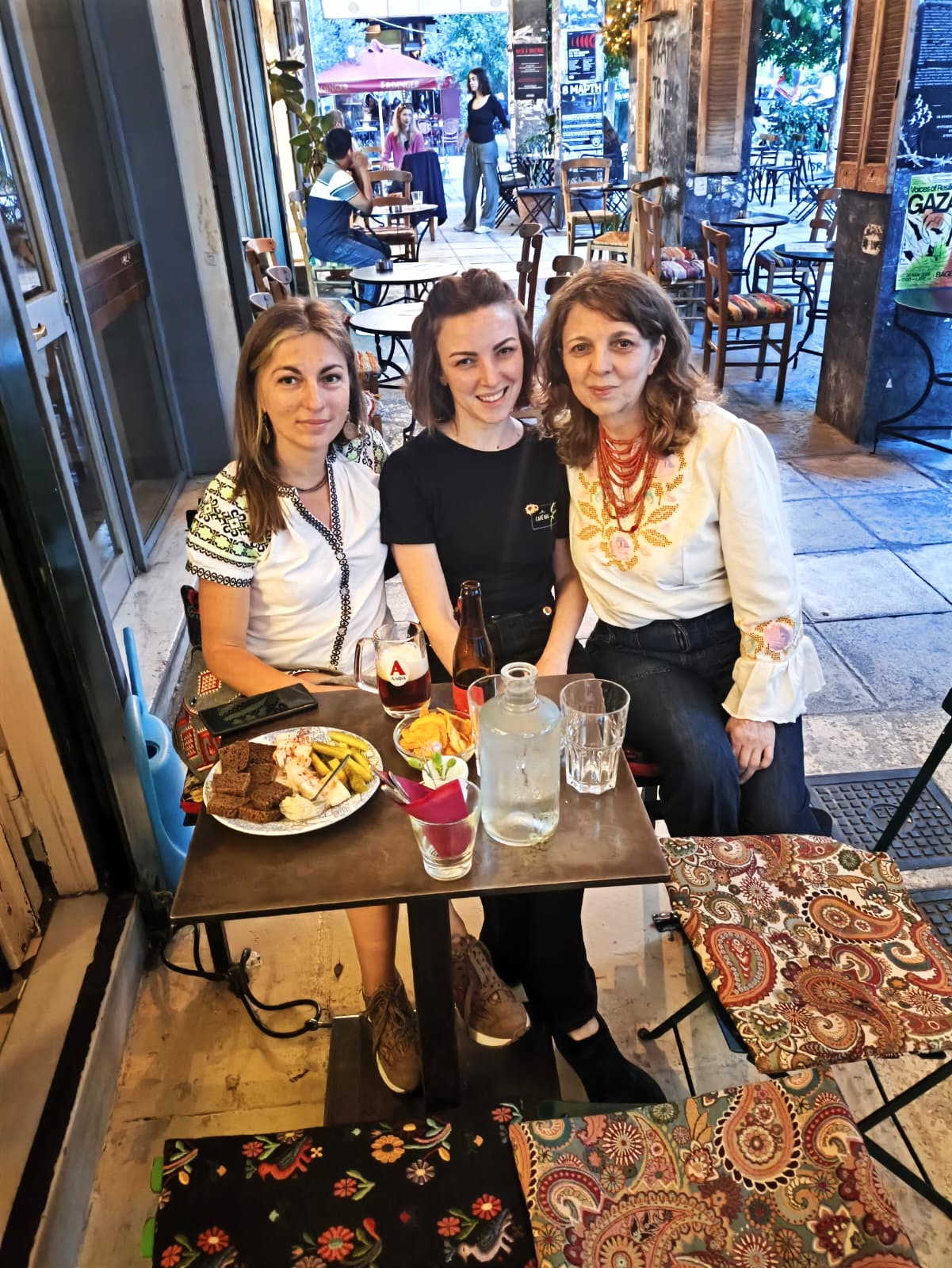
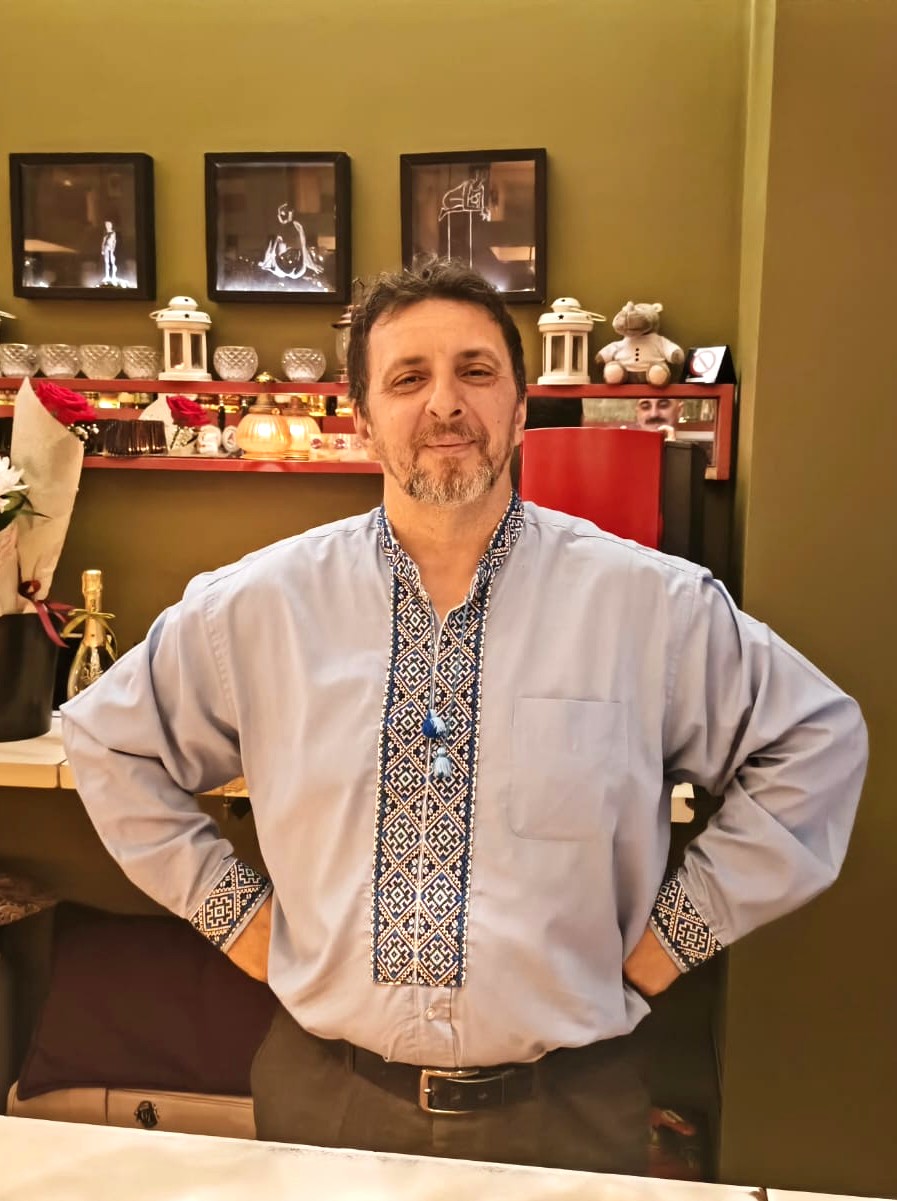
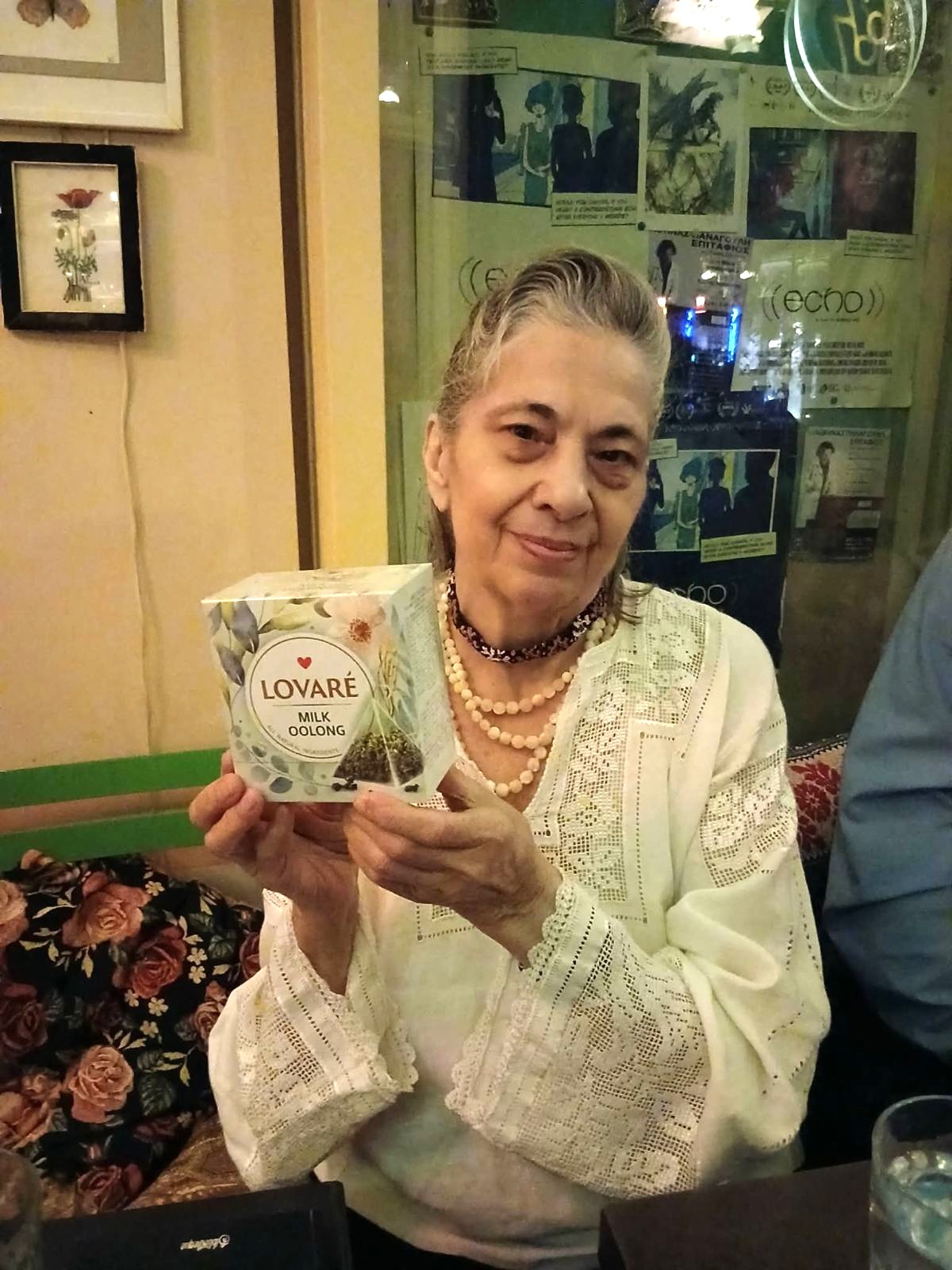
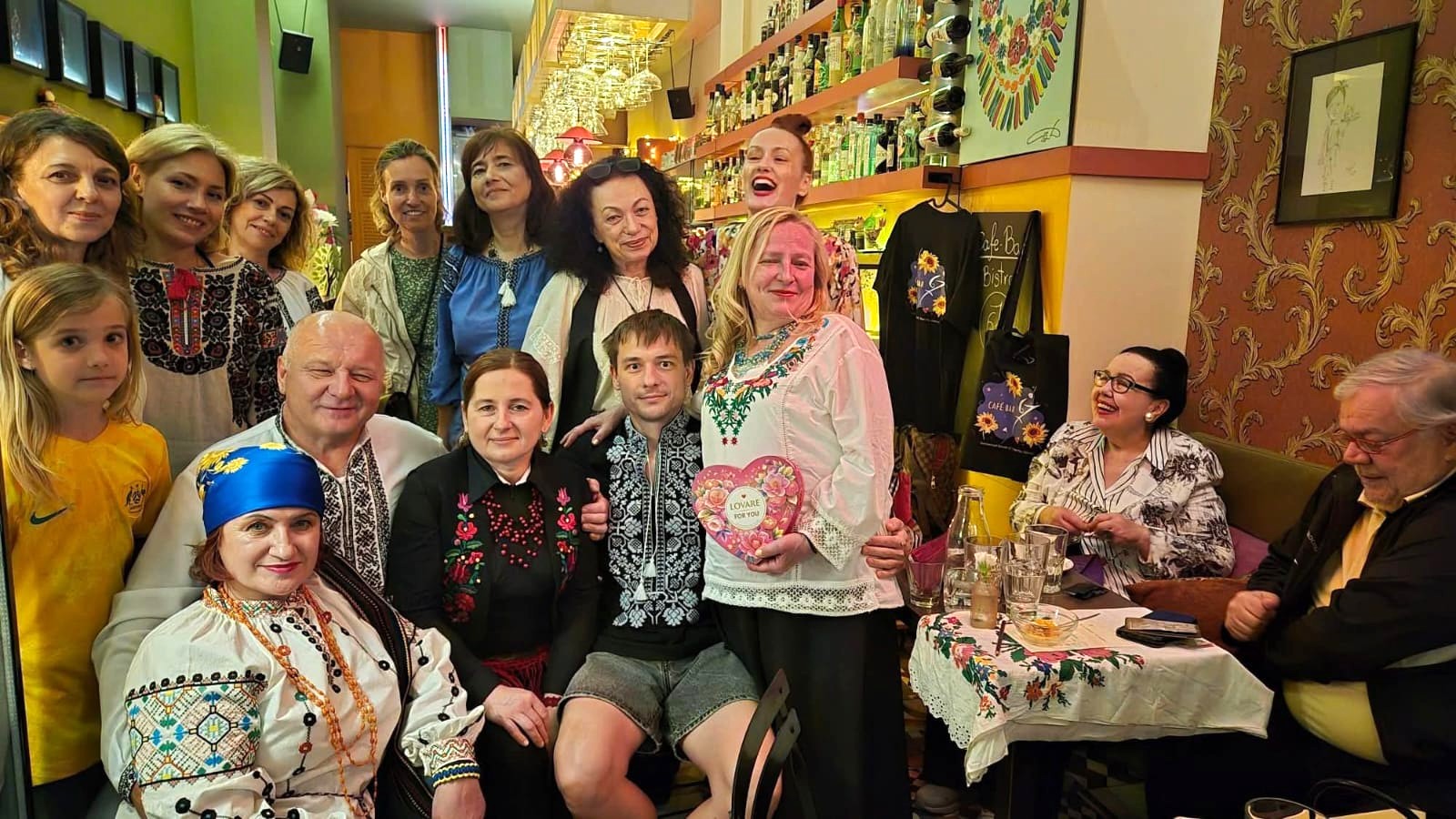
Центр уваги зайняли вишиванки різного стилю, а також найоригінальніші повсякденні образи з етноелементами. Завдяки дружньому й вільному характеру події все відбувалося в дуже теплій атмосфері, майже як невимушена зустріч однієї родини.
Темою конкурсу було показати, як українці, і не тільки, можуть використовувати традиційну українську вишиванку в повсякденному житті й у власному стилі. Журі не шукало «ідеального» учасника, а намагалося відзначити тих, хто створив найцікавіший образ — свій особистий стиль із вишиванкою, що виглядав природно, гармонійно й щиро.
У конкурсі брали участь як українці, так і греки. Усі вишиванки були дуже різними: відрізнялися крої, матеріали, колорит та поєднання з повсякденним одягом. Саме це зробило вибір для журі особливо відповідальним і непростим. Врешті було визначено п’ять переможців, які отримали заздалегідь підготовлені призи, а ще чотири вишиванки отримали окрему відзнаку — улюблений коктейль від «Cafe 67», який запропонували власники кафетерію Леся Слободян зі своєю родиною.
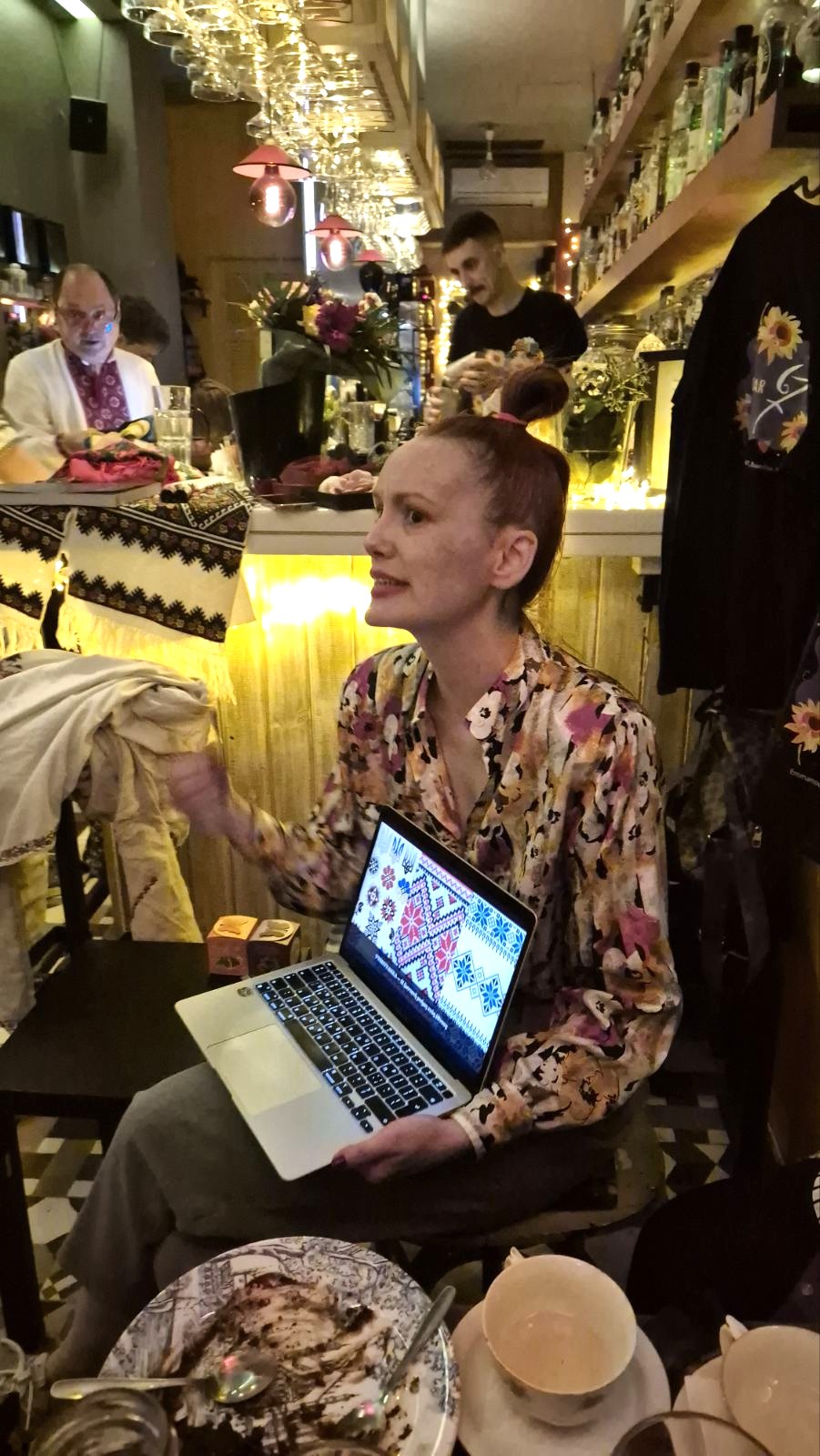
На початку заходу ми ненав’язливо поділилися історією української вишиванки — про те, що це не лише народний стрій, а живий код нації, що сягає аж до Трипільської культури, до часів понад 5000 років тому. Ті самі орнаменти, що колись жили на давніх поверхнях, сьогодні втілилися в сучасних вишиванках та прикрасах, легко споглядаючи нам на глибоке українське коріння.
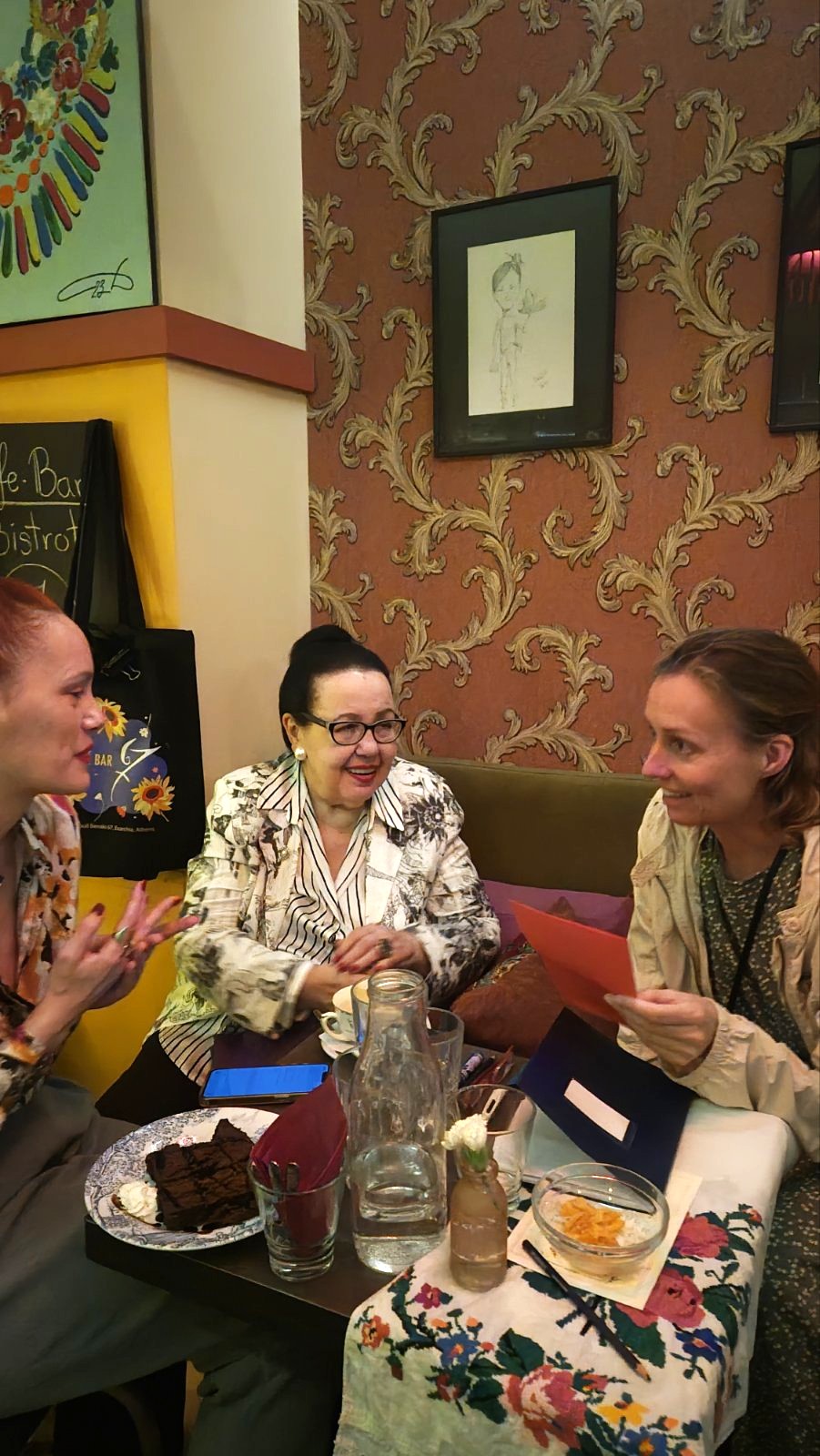
Особливо теплим і натхненним був майстер-клас відомої грецької дизайнерки та креативної стилістки Джой (Зої) Кументаку. Вона делікатно поділилася результатами своїх досліджень і показала, як елегантно вводити елементи вишивки в повсякденний одяг, щоб створювати неповторні, сучасні образи. У короткій презентації вона навіть згадала, що світові бренди, зокрема Dior, у 2008 році використали український весільний стрій як тему однієї зі своїх колекцій.
Подія постійно привертала увагу перехожих, які зупинялися, щоб зрозуміти, що ж це за барвисте дійство відбувається, не говорячи вже про постійних відвідувачів кафетерії, які зголосилися виступити як друге журі й відзначити своїх улюблених учасників.
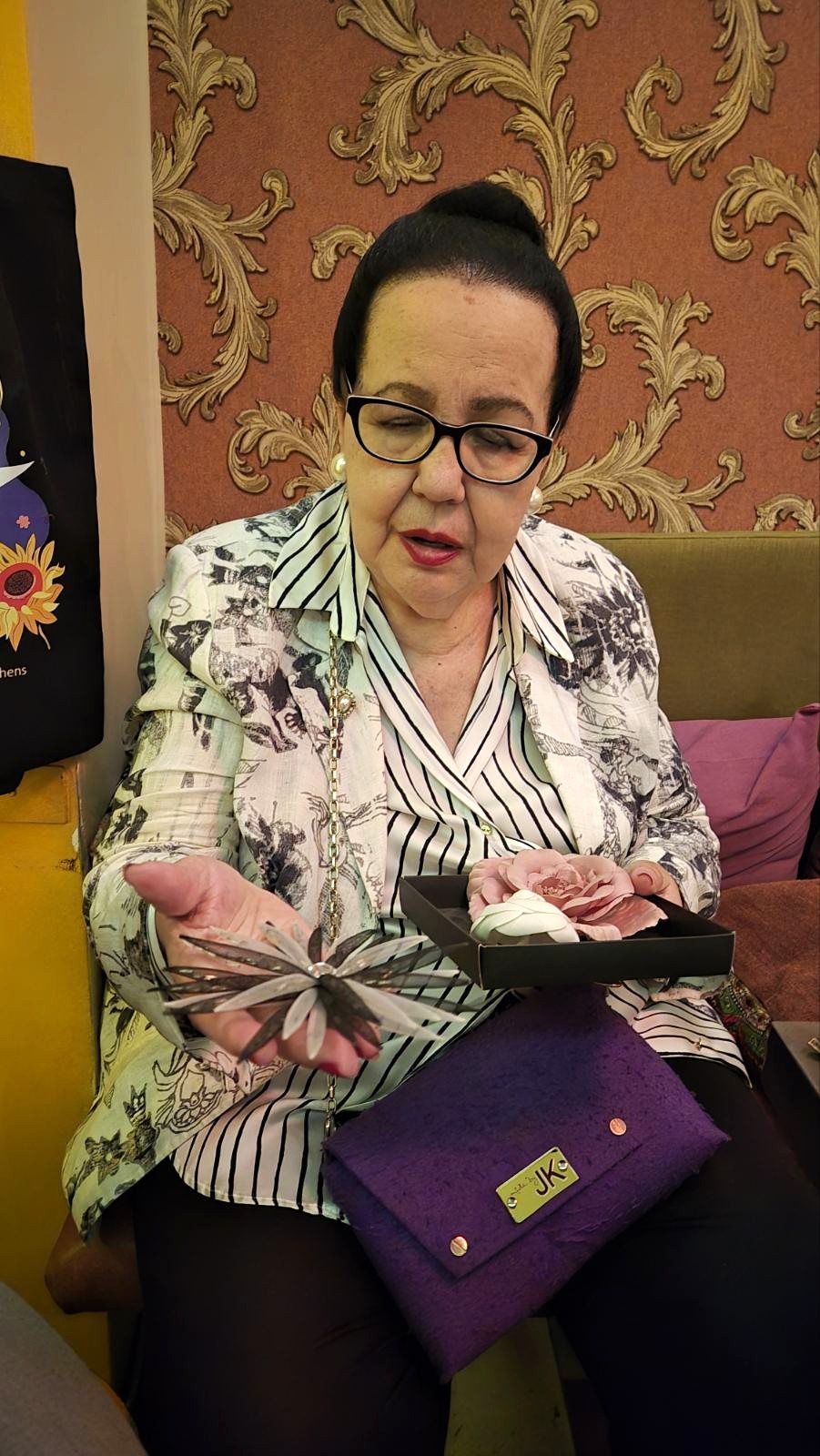
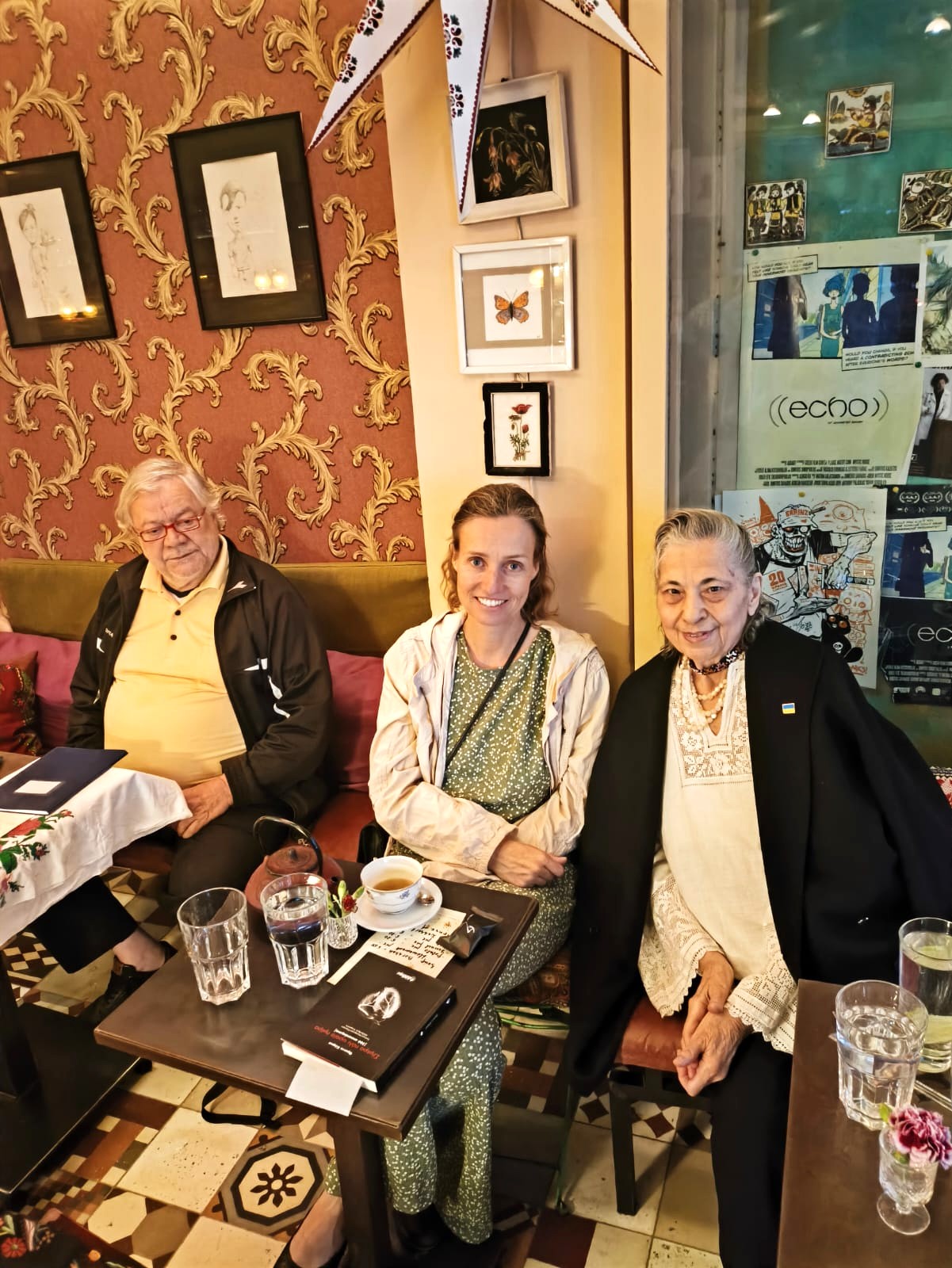
Велика подяка всім, хто вирішив долучитися, а також професійним членам журі — консультантці з креативної стратегії та відомій дизайнерці одягу Joy Koumentakou, представниці вуличного журналу «Схедіа» Katrin Kretschmer та досвідченому педагогу, психотерапевту і публіцисту Панайотису Корпасу. Усі вони є беззаперечними друзями України. Окрема подяка усім за підготовку та чудові світлини, а родині Слободян — за незвичайну ініціативу та постійну підтримку української справи у Греції.
Підсумком став тихий, ніжний і радісний вечір, де вишиванка зустріла міський стиль стародавніх Атен, щирі посмішки гостей і теплу грецьку гостинність.
 |
 |
 |
 |
 |
 |
 |
 |
 |
 |
 |
 |
 |
 |
 |
 |
 |
 |
 |
 |
 |
 |
 Η Ημέρα της Βισιβάνκα στην Ελλάδα έγινε γέφυρα ανάμεσα στην ουκρανική παράδοση, την καθημερινή μόδα και τη φιλική ατμόσφαιρα του «Cafe 67».
Στις 21 Μαΐου 2026, όταν η Ουκρανία γιόρταζε ήδη για 20ή χρονιά την Ημέρα της Βισιβάνκα, κάθε τρίτη Πέμπτη του Μαΐου, στο αγαπημένο για τους Ουκρανούς της Αθήνας «Cafe 67», στην οδό Εμμανουήλ Μπενάκη 67, στην αθηναϊκή συνοικία των Εξαρχείων, πραγματοποιήθηκε μια ζεστή και φιλική εκδήλωση.
Στο επίκεντρο της προσοχής βρέθηκαν όχι μόνο βισιβάνκες διαφορετικών στυλ, αλλά και προτάσεις για τον πιο πρωτότυπο καθημερινό στυλιστικό συνδυασμό με εθνοστοιχεία. Με δεδομένο τον φιλικό και χαλαρό χαρακτήρα της συνάντησης, η βραδιά κύλησε σε μια πολύ ζεστή ατμόσφαιρα, σχεδόν σαν να επρόκειτο για μια οικογενειακή συγκέντρωση.
Το θέμα του διαγωνισμού ήταν να δείξει πώς οι Ουκρανοί, αλλά και όχι μόνο, μπορούν να χρησιμοποιούν την παραδοσιακή ουκρανική βισιβάνκα στην καθημερινότητά τους και στο προσωπικό τους στυλ. Η κριτική επιτροπή δεν αναζητούσε τον «αψεγάδιαστο» συμμετέχοντα, αλλά έδινε προσοχή σε εκείνους που δημιούργησαν το πιο ενδιαφέρον σύνολο — ένα ξεχωριστό, προσωπικό στυλ με βισιβάνκα, που έμοιαζε αρμονικό και αυθεντικό.
Στον διαγωνισμό συμμετείχαν τόσο Ουκρανοί όσο και Έλληνες. Όλες οι βισιβάνκες ήταν πολύ διαφορετικές: άλλα κοψίματα, άλλα υλικά, άλλες χρωματικές αποχρώσεις και διαφορετικοί συνδυασμοί με καθημερινά ρούχα. Αυτό έκανε την επιλογή της επιτροπής ιδιαίτερα δύσκολη. Τελικά αναδείχθηκαν 5 νικητές, οι οποίοι έλαβαν τα προκαθορισμένα δώρα, ενώ άλλες τέσσερις βισιβάνκες τιμήθηκαν με πρόσθετη διάκριση — το αγαπημένο κοκτέιλ του «Cafe 67», προσφορά της οικογένειας Σλομποντιάν, ιδιοκτητών του καφέ.
Στην αρχή της εκδήλωσης μοιραστήκαμε μια σύντομη ιστορία της ουκρανικής βισιβάνκα — ότι δεν είναι μόνο παραδοσιακή φορεσιά, αλλά ένας ζωντανός κώδικας του έθνους, που φτάνει μέχρι τον Τρυπιλιανό πολιτισμό, πριν περισσότερα από 5000 χρόνια. Τα ίδια μοτίβα που κάποτε ζούσαν πάνω σε αρχαίες επιφάνειες, σήμερα ζουν σε σύγχρονες βισιβάνκες και κοσμήματα, θυμίζοντάς μας τις βαθιές ουκρανικές ρίζες.
Ιδιαίτερα ενδιαφέρον ήταν το masterclass της γνωστής Ελληνίδας σχεδιάστριας και creative stylist Joy (Zoí) Koumentakou. Μοιράστηκε τα αποτελέσματα της έρευνάς της και έδειξε πώς μπορούν να ενσωματωθούν κομψά στοιχεία της βισιβάνκα στην καθημερινή ένδυση, ώστε να δημιουργούνται μοναδικά, σύγχρονα looks. Στη σύντομη παρουσίασή της αναφέρθηκε και σε διεθνείς οίκους μόδας, όπως ο Dior, ο οποίος το 2008 εμπνεύστηκε από την ουκρανική νυφική φορεσιά για μία από τις συλλογές του.
Η εκδήλωση τραβούσε συνεχώς την προσοχή των περαστικών, που σταματούσαν για να μάθουν τι ακριβώς ήταν αυτό το πολύχρωμο δρώμενο, χωρίς να λείπουν και οι τακτικοί θαμώνες του καφέ, οι οποίοι προσφέρθηκαν να λειτουργήσουν ως δεύτερη επιτροπή και επέλεξαν τους δικούς τους νικητές.
Θερμές ευχαριστίες σε όλους όσοι επέλεξαν να συμμετάσχουν, αλλά και στα μέλη της επαγγελματικής κριτικής επιτροπής — την σύμβουλο δημιουργικής στρατηγικής και γνωστή σχεδιάστρια μόδας Joy Koumentakou, την εκπρόσωπο του περιοδικού δρόμου «Σχέδια» Katrin Kretschmer και τον έμπειρο παιδαγωγό, ψυχοθεραπευτή και δημοσιογράφο Παναγιώτη Κόρπα. Όλοι τους είναι αδιαμφισβήτητοι φίλοι της Ουκρανίας. Ιδιαίτερη ευχαριστία στους παρευρισκόμενους για τις προετοιμασίες και υπέροχες φωτογραφίες, καθώς και σε ολόκληρη την οικογένεια Σλομποντιάν για την εξαιρετική πρωτοβουλία και τη συνεχή στήριξη της ουκρανικής υπόθεσης στην Ελλάδα.
Το αποτέλεσμα ήταν μια ζεστή, τρυφερή και χαρούμενη βραδιά, όπου η βισιβάνκα συνάντησε το αστικό στυλ της παλιάς Αθήνας, τα ειλικρινή χαμόγελα των παρευρισκομένων και την ελληνική φιλοξενία.

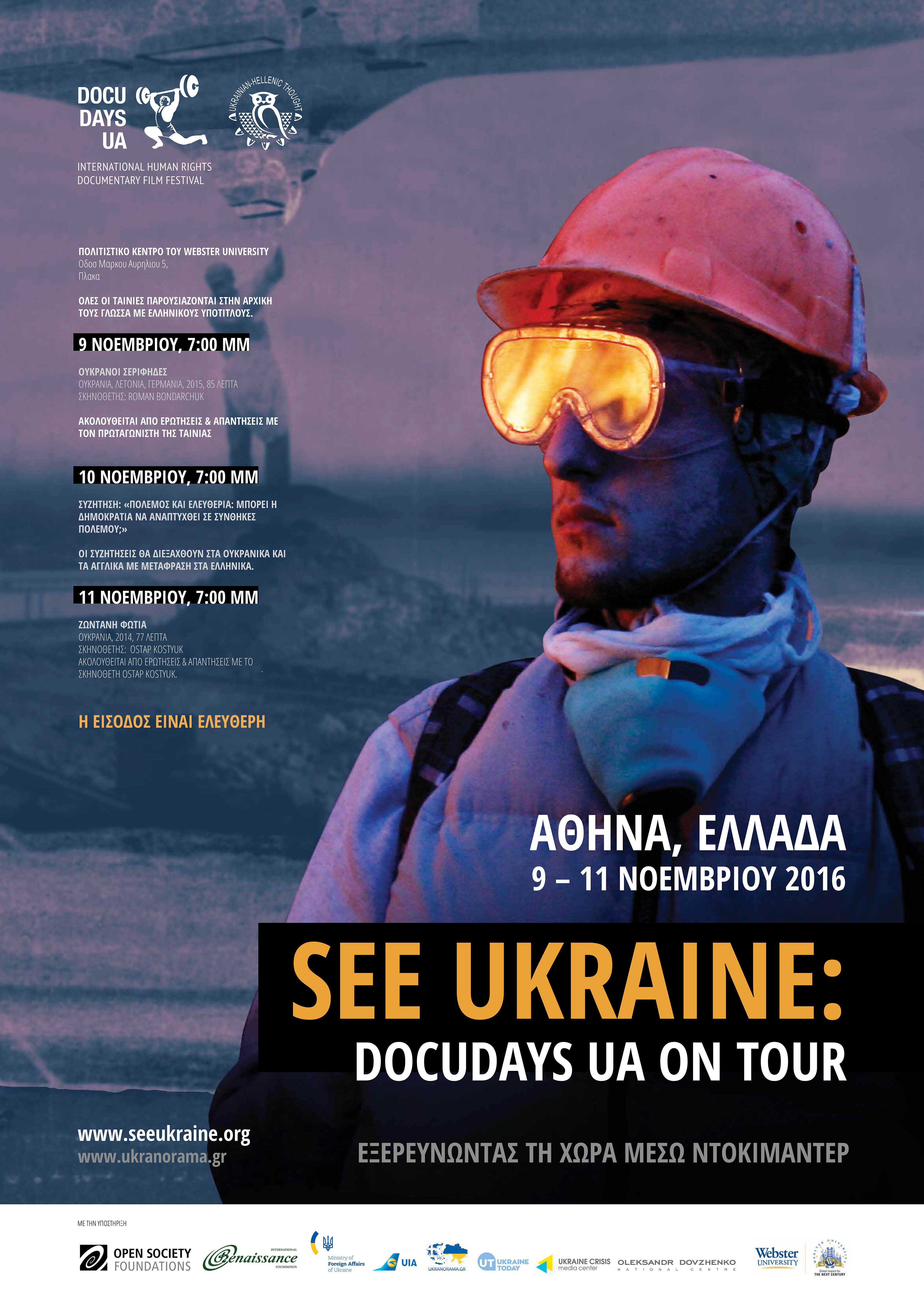
SEE UKRAINE. DOCUDAYS UA ON TOUR. GREECE, ATHENS, comments about suspending the second part of the project See Ukraine
 Radical leftists baffle Docudays UA screenings in Athens
On May 13, the project SEE UKRAINE: DOCUDAYS UA ON TOUR started in Athens. On the eve of the opening the managers of the Exile Room, the main festival venue in Greece, refused to host the festival events after radical groups' call for a protest rally near the location. The organizers addressed the Embassy of Ukraine to the Hellenic Republic urgently with a request to host the screenings and discussions in its premises.
In the evening of May 13, while the film "Euromaidan. Rough Cut" was being screened at the opening of the festival, the rally of pro-Russian forces, who called themselves "Greek anti-fascists", gathered next to the Exile Room. After the meeting, a group of young people headed towards the gallery which would have to host the Ukrainian photographer Oleksandr Hliadelov's exhibition "Hey, brother?". They threatened the gallery owners and accused them of supporting the Ukrainian nazis.
It is reported that the local radical sources spread false information about the project "See Ukraine", distort the facts and accuse the organizers of the attempts to slander the residents of Crimea and Donbas, although the program contains no films on a similar topical.
"Through the example of cultural diplomacy initiative of the Docudays UA we have seen how the information campaign against Ukraine is being waged and how it is important not to succumb to provocations and not to believe that the Greeks are hostile to Ukrainians. They are not. Pro-Russian forces deliberately create this myth, trying to quarrel two countries with each other. This is why we held the first part of the festival in Greece despite the difficulties," said Olha Birzul, the PR-coordinator of the project "See Ukraine: Docudays UA on Tour."
During three days, the viewers in Athens had the opportunity to watch short films of Ukrainian filmmakers: "Doctor comes last" by Svitlana Shymko and "Sirs and signors" by Oleksandr Techynsky. Moreover, the discussion "Where is Ukraine heading after Euromaidan" was held, involving Ukrainian-Greek experts: philosopher Volodymyr Yermolenko, journalist Tetyana Oharkova, Greek professor of geostrategy Nikos Liheros and historian Michalis Varlasa.
"First of all, we were impressed by how much the audience was interested in the discussion. The people had a lot of questions concerning the state of affairs in Ukraine, fighting against corruption, power of the Ukrainian civil society, as well as Russian aggression, causes of the annexation of Crimea and the future of the Donbas, - says Tetyana Ogarkova (Ukraine Crisis Media Center, Hromadske TV). – Also, we talked about difficultues in explaining the pro-European choice of Ukraine in Greece, a country with a strong Eurosceptic background."
"We should continue to do everything possible to convey information about Ukraine to the international audience. It is important to speak of the power of Ukrainian society, the rise of a new Ukraine, and the nature of Russian aggression that threatens the entire world order," said Volodymyr Yermolenko, the member of the NGO "Internews-Ukraine."
The festival team truly appreciates the assitance of the Association of the Ukrainian Diaspora in Greece "Ukrainian - Hellenic Thought" in organizing the film screenings of SEE UKRAINE: DOCUDAYS UA ON TOUR, as well as the Ukrainian Embassy which agreed to host the events.
For the time being the team of SEE UKRAINE has suspended the second part of the project, scheduled for May, 26-28, with the aim of finding more secure venues.
Radical leftists baffle Docudays UA screenings in Athens
On May 13, the project SEE UKRAINE: DOCUDAYS UA ON TOUR started in Athens. On the eve of the opening the managers of the Exile Room, the main festival venue in Greece, refused to host the festival events after radical groups' call for a protest rally near the location. The organizers addressed the Embassy of Ukraine to the Hellenic Republic urgently with a request to host the screenings and discussions in its premises.
In the evening of May 13, while the film "Euromaidan. Rough Cut" was being screened at the opening of the festival, the rally of pro-Russian forces, who called themselves "Greek anti-fascists", gathered next to the Exile Room. After the meeting, a group of young people headed towards the gallery which would have to host the Ukrainian photographer Oleksandr Hliadelov's exhibition "Hey, brother?". They threatened the gallery owners and accused them of supporting the Ukrainian nazis.
It is reported that the local radical sources spread false information about the project "See Ukraine", distort the facts and accuse the organizers of the attempts to slander the residents of Crimea and Donbas, although the program contains no films on a similar topical.
"Through the example of cultural diplomacy initiative of the Docudays UA we have seen how the information campaign against Ukraine is being waged and how it is important not to succumb to provocations and not to believe that the Greeks are hostile to Ukrainians. They are not. Pro-Russian forces deliberately create this myth, trying to quarrel two countries with each other. This is why we held the first part of the festival in Greece despite the difficulties," said Olha Birzul, the PR-coordinator of the project "See Ukraine: Docudays UA on Tour."
During three days, the viewers in Athens had the opportunity to watch short films of Ukrainian filmmakers: "Doctor comes last" by Svitlana Shymko and "Sirs and signors" by Oleksandr Techynsky. Moreover, the discussion "Where is Ukraine heading after Euromaidan" was held, involving Ukrainian-Greek experts: philosopher Volodymyr Yermolenko, journalist Tetyana Oharkova, Greek professor of geostrategy Nikos Liheros and historian Michalis Varlasa.
"First of all, we were impressed by how much the audience was interested in the discussion. The people had a lot of questions concerning the state of affairs in Ukraine, fighting against corruption, power of the Ukrainian civil society, as well as Russian aggression, causes of the annexation of Crimea and the future of the Donbas, - says Tetyana Ogarkova (Ukraine Crisis Media Center, Hromadske TV). – Also, we talked about difficultues in explaining the pro-European choice of Ukraine in Greece, a country with a strong Eurosceptic background."
"We should continue to do everything possible to convey information about Ukraine to the international audience. It is important to speak of the power of Ukrainian society, the rise of a new Ukraine, and the nature of Russian aggression that threatens the entire world order," said Volodymyr Yermolenko, the member of the NGO "Internews-Ukraine."
The festival team truly appreciates the assitance of the Association of the Ukrainian Diaspora in Greece "Ukrainian - Hellenic Thought" in organizing the film screenings of SEE UKRAINE: DOCUDAYS UA ON TOUR, as well as the Ukrainian Embassy which agreed to host the events.
For the time being the team of SEE UKRAINE has suspended the second part of the project, scheduled for May, 26-28, with the aim of finding more secure venues.